For self-employed New Jersey buyers
Bank Statement Loans in New Jersey: How Self-Employed Buyers Qualify
A bank statement loan counts your deposits instead of your tax returns. The lender averages 12 or 24 months of personal or business statements. On business accounts it takes off an expense factor, and the rest is your income. CMG Home Loans offers 12- and 24-month bank statement programs.
By Jimmy Joseph, MBA, loan officer, NMLS #1577754, CMG Home Loans (NMLS #1820). Updated October 27, 2026. Equal Housing Opportunity.
Ask Jimmy about a bank statement loan
Tell him your town, your line of work and your price range. He’ll reach out to you directly.
Use this form only for general contact details and loan questions. Do not enter a Social Security number, bank account number, or financial documents. Use the secure CMG application when you are ready to apply. See our privacy notice.
- Statements
- 12 or 24
- months, personal or business
- CMG minimum score
- 600–660
- by product, CMG sample March 13, 2025
- Down payment
- 10–20%
- often, per CMG Financial
- CMG loan size
- Up to $3.5M
- by product, CMG sample March 13, 2025

What a bank statement loan is
It is a mortgage for people who work for themselves. Instead of tax returns, W-2s or pay stubs, the lender reads your bank deposits. It is a non-qualified mortgage, or non-QM. That means it sits outside the Qualified Mortgage category that most conventional, FHA and VA loans fall into.
Non-QM does not mean no proof. Under the federal ability-to-repay rule, a lender must verify the income it relies on with “reasonably reliable” third-party records. The rule lists “financial institution records” as one of them. Your statements are that record.
What makes a loan a Qualified Mortgage, per the CFPB:
- No interest-only period, no negative amortization and no balloon payment.
- A term of 30 years or less.
- A cap on upfront points and fees, and on the APR for most loans.
- Income or assets and debts considered and verified.
Bank statement loans verify income a different way, so they live outside that box. The CFPB’s Qualified Mortgage page explains each rule.
Why your tax return can undercount you
A full-documentation loan reads your tax returns. Fannie Mae’s guide asks for the past two years of returns from a self-employed borrower. One year can do if the business is five years old and you have owned 25% or more of it for five straight years.
The catch is your write-offs. Every truck payment, tool and phone bill you deduct lowers the income the lender can use. A good year for taxes can be a weak year for a mortgage.
- Big deductions: vehicles, equipment and home-office costs shrink net profit.
- A new or growing business: last year’s return lags this year’s deposits.
- A one-time bad year: a slow year pulls down a two-year average.
- Several income streams: 1099 work, a side business and rental income make the returns harder to read.
How the income math works
Every bank statement program runs the same four steps:
- Add up the deposits for 12 or 24 months in a row.
- Take out what isn’t income: transfers between your own accounts, loan proceeds, refunds and one-off sales.
- Divide by the number of months to get a monthly average.
- On business statements, take off an expense factor. What is left is your qualifying income.
The expense factor stands in for your business costs. CMG does not publish its factor, so here are two programs that do. Both AD Mortgage and Farm Bureau Bank start at 50%. Farm Bureau Bank uses 70% for high-cost trades such as restaurants. Both allow a lower factor with a third-party expense letter, such as one from a CPA or tax preparer. AD Mortgage counts 100% of eligible personal-account deposits. These are other lenders’ programs, not CMG quotes.
A worked example: a Bergen County electrical contractor
This is an illustration, not a quote or an approval. The numbers are made up to show the math.
| Step | Amount |
|---|---|
| Total deposits, 24 months of business statements | $600,000 |
| Less deposits that aren't income (transfers from savings, an equipment loan) | −$36,000 |
| Deposits that count | $564,000 |
| Monthly average (÷ 24) | $23,500 |
| Less a 50% expense factor | −$11,750 |
| Qualifying income on bank statements | $11,750 a month |
| Same owner's Schedule C net profit, $102,000 ÷ 12 | $8,500 a month |
The tax-return figure is before any add-backs the lender’s cash-flow analysis allows, such as depreciation. In this example the statements show $3,250 a month more income than the return.
Estimator
Bank statement income estimator
Add up the deposits on your statements, leave out the ones that aren’t income, and see the monthly figure the math produces. It is an estimate of how the method works, not a quote or an approval.
Whose statements?
How many months of statements?
Transfers between your own accounts, loan proceeds, refunds, one-off sales.
The share of business deposits treated as costs. 50% is the default on the published programs cited on this page; a third-party expense letter, such as one from a CPA, can support a lower figure.
Estimated qualifying income
$11,750 a month
$141,000 a year
- Deposits that count
- $564,000
- Monthly average over 24 months
- $23,500
- Expense factor applied
- 50%
The program, the underwriter and your documents decide the real figure. Expense factors run from 0% to 90% here; some programs use 70% for high-cost trades such as restaurants.
CMG’s bank statement programs
CMG Home Loans lists bank statement programs (12 and 24 month) among its non-QM loans, next to DSCR, ITIN and asset depletion. On March 13, 2025, CMG Financial published a sample of its bank statement products:
| Product | Max loan-to-value | Max loan | Min credit score |
|---|---|---|---|
| Prime Bank Statement | 90% | $3 million | 600 |
| Edge Bank Statement | 90% | $3.5 million | 660 |
| Sharp Standard | 85% | $2 million | 660 |
| Edge Standard | 80% | $3 million | 640 |
| Horizon Standard | 90% | $3.5 million | 640 |
Source: CMG Financial, March 13, 2025. CMG calls it “just a small sampling” and notes these products “may have higher interest rates, more points, or more fees than other products requiring documentation.” Guidelines change; Jimmy confirms the current product for your file.
CMG Financial also says bank statement loans often need 10% to 20% down. Its bank division, Bank CMG, lists bank statement, 1099 income and asset qualifier programs for self-employed borrowers.
Bank statement loan requirements: the document checklist
Start with what CMG Financial lists for its bank statement loan, then the usual mortgage file:
- 12 or 24 months of statements, every page, for the account you’ll use: personal or business.
- A letter verifying you’re self-employed from a CPA, enrolled agent or licensed tax preparer.
- Proof the business exists if the lender asks, such as a business registration or license.
- Notes on unusual deposits: where a large or one-off deposit came from.
- Asset statements for the down payment, closing costs and any reserves.
- A photo ID and permission for a credit check, explained before you give it.
Personal or business statements? Business statements fit when client payments land in a business account; the expense factor then applies. Personal statements fit sole proprietors who are paid into a personal account. Mixing both in one account makes the deposits harder to read.
What underwriters ask about
Expect questions about your deposits. These are the usual ones:
- Large or odd deposits: where they came from, and whether they are income.
- Transfers between your accounts: these are not income and come out of the total.
- Overdrafts and returned items: they raise questions about cash flow.
- A falling trend: deposits that shrink month after month.
- Personal and business money mixed together in one account.
The fix is simple: a separate business account, steady deposits and a short note for anything out of the ordinary.
Who in New Jersey uses a bank statement loan
New Jersey had 924,331 nonemployer businesses in 2024, per the Census Bureau: businesses with no paid employees that file federal income tax. CMG Financial names small business owners, entrepreneurs, freelancers, gig workers and full-time real estate investors as good candidates for a bank statement loan. In New Jersey that includes people such as:
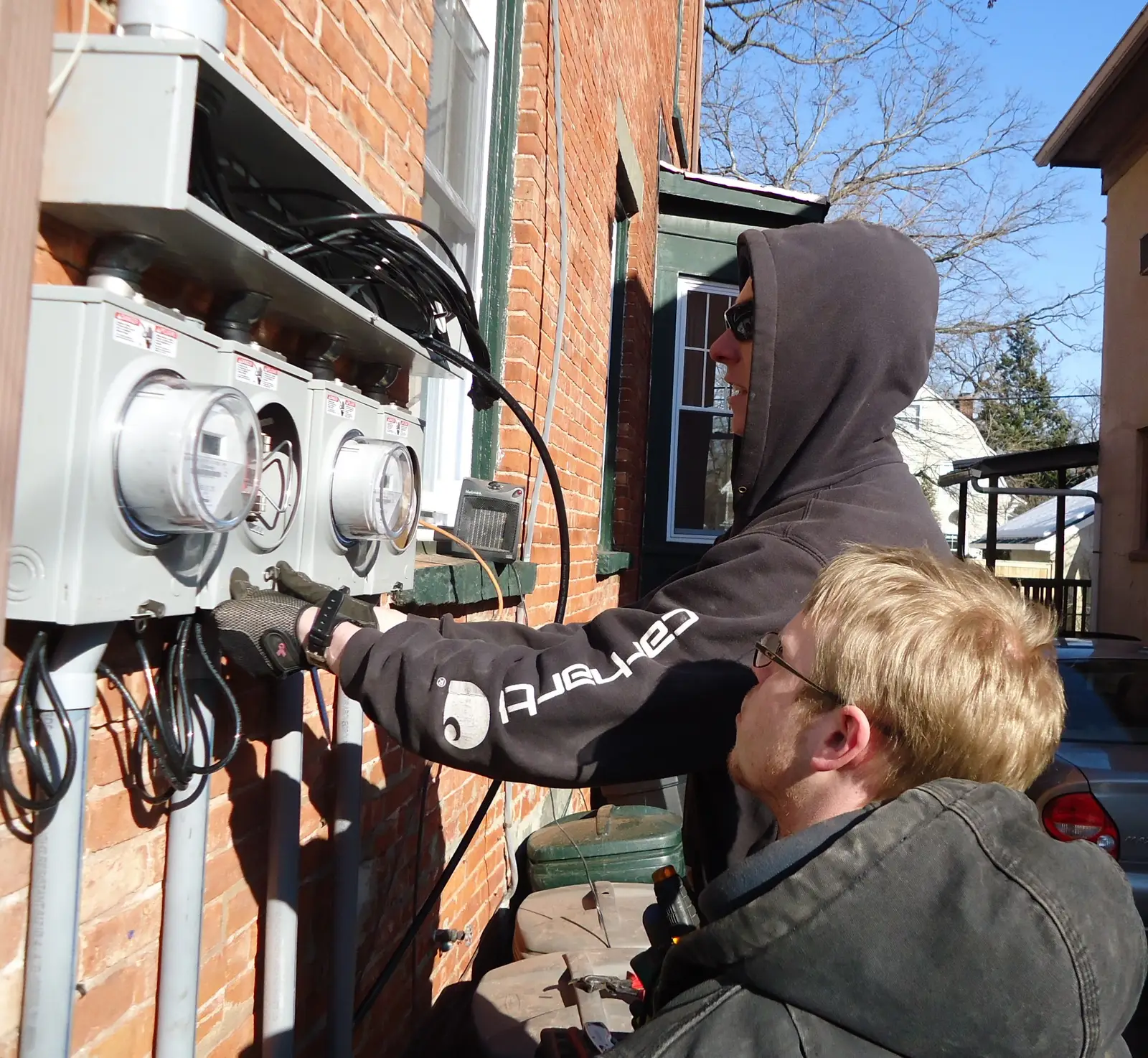
- Electricians, plumbers, HVAC techs and general contractors.
- Owner-operator truckers and delivery drivers.
- Real estate agents and other commission earners paid on 1099.
- Nurses, therapists and other 1099 medical staff.
- Salon, barber and restaurant owners.
- Consultants, designers and other freelancers.
Bank statement loan or another route?
Bank statements are one of several ways a self-employed buyer can qualify. Here is how they line up:
| Route | What proves income | Who it fits | Read more |
|---|---|---|---|
| Full documentation (tax returns) | Personal and business tax returns, usually two years; one year in some cases (Fannie Mae B3-3.5-01) | Owners whose returns already show enough income; often the lowest-cost route | Self-employed mortgages NJ |
| Bank statement | 12 or 24 months of personal or business statements, plus a CPA, enrolled agent or tax preparer letter | Owners whose write-offs make taxable income look small | This page |
| 1099 income | The past two years of 1099s, per CMG Financial | Contractors and commission earners paid on 1099 | Self-employed mortgages NJ |
| Profit and loss (P&L) | A profit and loss statement for the business | Owners whose accountant prepares a profit and loss statement | Ask Jimmy |
| Asset depletion | Liquid assets turned into a monthly income figure | Retirees, owners who sold a business, asset-rich buyers | Asset depletion mortgage NJ |
| DSCR (investors) | The rental property's cash flow, not your income | Investment property buyers | Real estate investor loans NJ |
CMG Financial and Bank CMG list 1099, P&L, asset-based and investor cash-flow programs; CMG lists DSCR and asset depletion among its non-QM solutions.
If your tax returns already qualify you, start with our self-employed mortgage guide. A full-documentation loan usually costs less.
Pros and cons
Why buyers choose it
- Income is read from deposits, not after write-offs.
- 12 months can be enough on some programs.
- Larger loan sizes: up to $3.5 million in CMG’s sample.
- Works for uneven, seasonal income.
What it costs you
- May carry higher rates, more points or more fees, per CMG.
- Often 10% to 20% down.
- More questions about deposits during underwriting.
- A CPA, enrolled agent or tax preparer letter to arrange.
Buying in New Jersey with a bank statement loan, step by step
- Pull your statements. 12 or 24 months, every page, and run them through the estimator above.
- Talk to Jimmy. Your line of work, the account the money lands in, your credit and your down payment decide which product fits.
- Get the letter from your CPA, enrolled agent or tax preparer.
- Get pre-approved, then shop. Any credit check is explained before you authorize it.
- Sign a contract. In New Jersey that starts the attorney review period.
- Answer the deposit questions during underwriting, and budget for New Jersey closing costs.
- Close once the loan is approved and the appraisal and title are clear.

Want a straight answer on your statements?
Tell Jimmy your line of work, which account your income lands in, and your price range. He’ll tell you whether a bank statement loan or the tax-return route fits, and what to gather. Program eligibility and approval follow the lender’s guidelines and review; any credit check is explained before you authorize it.
Ready to apply? Start a secure application with CMG.
Frequently asked questions
What is a bank statement loan?
A mortgage that works out your income from 12 or 24 months of bank deposits. It replaces tax returns, W-2s and pay stubs as proof of income. It is a non-qualified mortgage (non-QM), built for self-employed borrowers whose write-offs make their taxable income look smaller than their cash flow.
Can I get a mortgage with just bank statements?
Not with statements alone. The statements replace your tax returns as proof of income, but you still go through a credit check, an appraisal and an asset review. CMG Financial's description of its bank statement loan also asks for a letter from a CPA, enrolled agent or licensed tax preparer verifying that you are self-employed.
How is income calculated on a bank statement loan?
The lender adds up 12 or 24 months of deposits and leaves out money that isn't income, such as transfers and loans. It divides by the number of months. On business statements an expense factor comes off next. AD Mortgage and Farm Bureau Bank both default to 50%, and allow less with a third-party expense letter. AD Mortgage counts 100% of eligible personal-account deposits.
What credit score do I need for a bank statement loan?
It depends on the product. In the sample of bank statement products CMG Financial published on March 13, 2025, minimum scores ran from 600 to 660. Guidelines change, so confirm the current minimum for your file with Jimmy.
How much down payment does a bank statement loan need?
CMG Financial says bank statement loans typically ask for more than some conventional loans, often 10% to 20% down. In its published sample the maximum loan-to-value ran from 80% to 90% depending on the product, which works out to 10% to 20% down at the highest allowed loan amount.
Are bank statement loans a good idea?
They are a good fit when your tax returns understate what you earn and a full-documentation loan won't qualify you for the home you want. The trade-off is cost: CMG notes these products may have higher interest rates, more points, or more fees than loans that use full documentation. If your returns already qualify you, the tax-return route usually costs less.
Does CMG Home Loans offer bank statement loans?
Yes. CMG lists bank statement programs (12 and 24 month) among its non-QM solutions, alongside DSCR, ITIN and asset depletion loans. Jimmy Joseph is a loan officer with CMG Mortgage, Inc., dba CMG Home Loans, in Paramus.
Is a bank statement loan the same as a no-doc loan?
No. Federal ability-to-repay rules still make the lender verify your income with reliable third-party records. Financial institution records are one of the record types the rule names (12 CFR 1026.43(c)(4)). Your statements are the documentation.
Can I use a bank statement loan for a second home or an investment property?
Some programs allow it. Farm Bureau Bank's published program covers owner-occupied homes, second homes and investment properties. CMG's published sample does not list property types, so ask Jimmy about your property. For a rental, CMG also lists DSCR loans, which qualify on the property's cash flow instead of your income.
Can I refinance with a bank statement loan?
Many bank statement programs allow refinances, including cash-out; AD Mortgage's published program, for example, allows cash-out up to $3 million. Whether a CMG product fits your refinance depends on your equity, credit and deposits. Ask Jimmy with your statements in hand.
Related guides
- Self-Employed Mortgages NJ→Every self-employed route: tax returns, 1099, P&L and bank statements.
- Asset Depletion Mortgage NJ→Qualify with savings and investments instead of income.
- Real Estate Investor Loans NJ→DSCR loans that qualify on the rental's cash flow.
- New Jersey Buyer Closing Costs→What a New Jersey buyer pays at the closing table.
Sources
- CMG Home Loans, Loan Programs (Non-QM Solutions: bank statement programs, 12 and 24 month), read October 27, 2026
- CMG Financial, "Building Your Future: The Top Home Loans for Small Business Owners," March 13, 2025
- CMG Financial, "No W-2 Forms? No Problem. We Can Still Help You Buy a Home!," June 15, 2023
- Bank CMG, Mortgage solutions for borrowers with unique financial situations
- Consumer Financial Protection Bureau, What is a Qualified Mortgage?
- 12 CFR 1026.43, Minimum standards for transactions secured by a dwelling (ability to repay)
- Fannie Mae Selling Guide B3-3.5-01, Underwriting Factors and Documentation for a Self-Employed Borrower
- U.S. Census Bureau, QuickFacts: New Jersey (nonemployer establishments, 2024)
- AD Mortgage, 12/24 Month Bank Statement program (not a CMG program)
- Farm Bureau Bank, Bank Statement Loans (not a CMG program)
Equal Housing Opportunity. Jimmy Joseph, MBA is a loan officer, NMLS #1577754, with CMG Mortgage, Inc., dba CMG Home Loans, NMLS #1820. Check current licensing in NMLS Consumer Access. Program guidelines, credit score minimums, loan-to-value limits and loan amounts change without notice and depend on the property and the full file. This page is information, not a commitment to lend, and does not quote rates. Tax questions belong with a tax adviser.